Why identical twins aren’t identical

They start the same… but biology doesn’t keep copies.
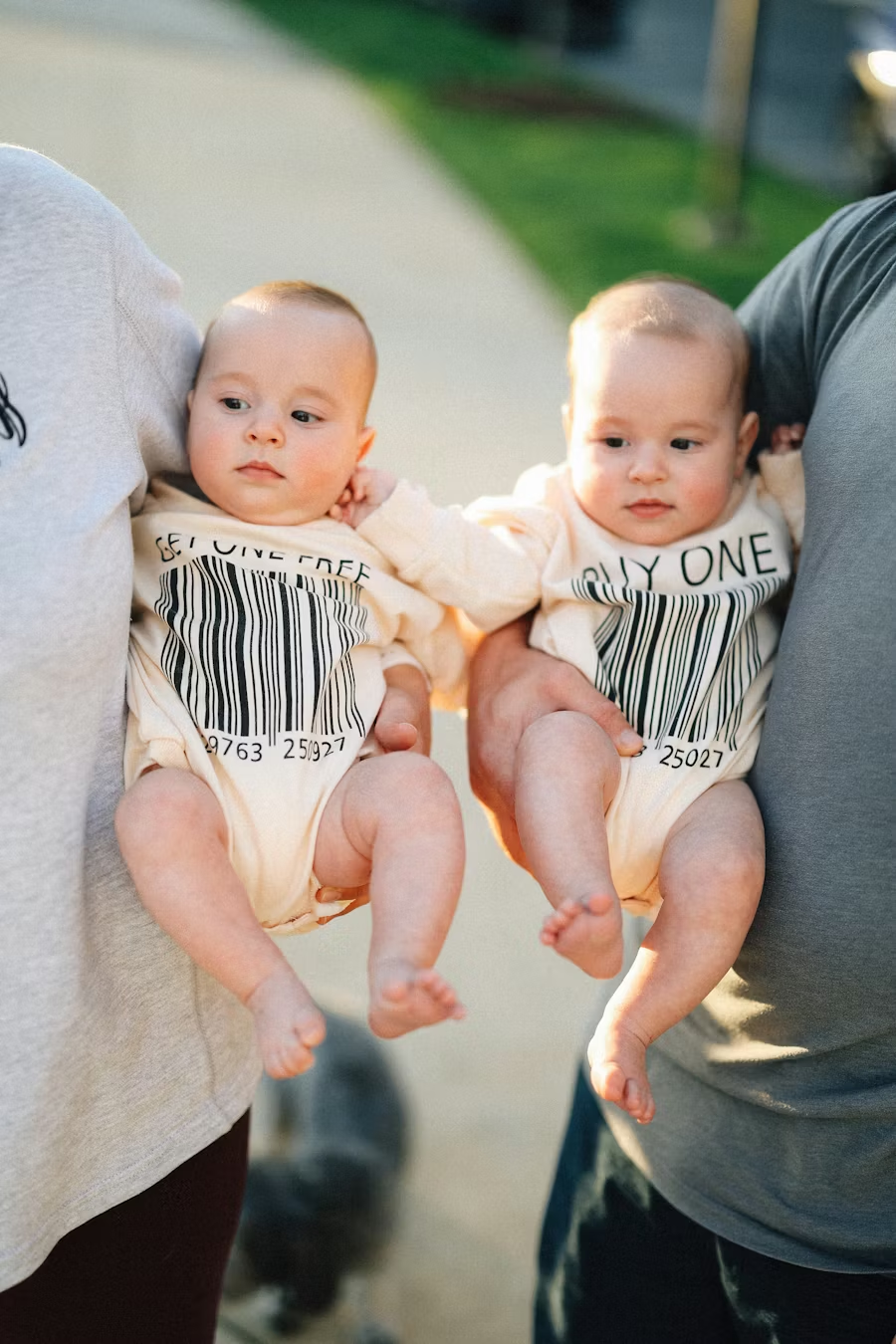
Did you know identical twins don’t even have identical fingerprints?
We grow up thinking identical twins are perfect copies - same DNA, same face, same everything. But if that were true, they should be indistinguishable in every way.
Yet one twin can develop a disease, the other never gets. One can be more anxious, while the other is calmer. Even their faces, over time, start to look slightly different.
So what’s going on? If their DNA is the same… why aren’t they?
In this post, we’ll unpack it all: how identical twins form, why DNA alone doesn’t define identity, how epigenetics reshapes gene activity, and how development itself introduces differences, sometimes even before birth.
Identical twins: the illusion of ‘same’
Identical twins (monozygotic twins) come from a fertilized egg that splits into two embryos.
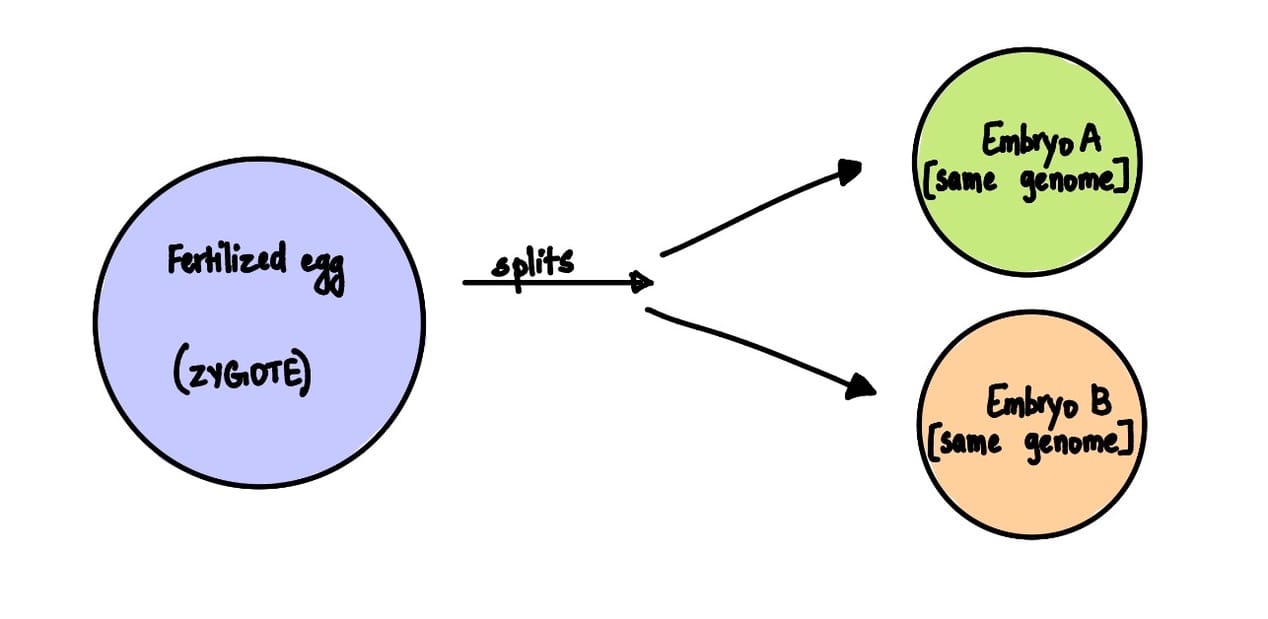
At that moment, they share the same genome - the same genetic blueprint.
But here’s something subtle but important:
That 'same DNA' assumption only holds at the moment of splitting.
After that, cells divide billions of times, and DNA replication isn’t perfect. Small errors (mutations) can occur, and once they happen, they’re copied into entire cell lineages.
This creates what scientists call mosaicism - think of it as a document photocopied hundreds of times. Each copy is nearly identical, but tiny printing errors accumulate, and eventually some copies look slightly different from others. That’s what’s happening inside your cells. (Bruder et al., 2008)
So technically:
→ Identical twins are not 100% genetically identical
→ They are extremely similar, but not exact clones
Epigenetics: same genes, different instructions
This is where things get interesting. If DNA is the blueprint, epigenetics is the control system. Epigenetic modifications (like DNA methylation and histone modifications) decide:
- Which genes are active
- Which genes stay silent
- How strongly certain genes are expressed
Think of it like a light switch panel — the wiring in the walls is your DNA and it never changes, but the switches control which rooms are lit up at any given moment.
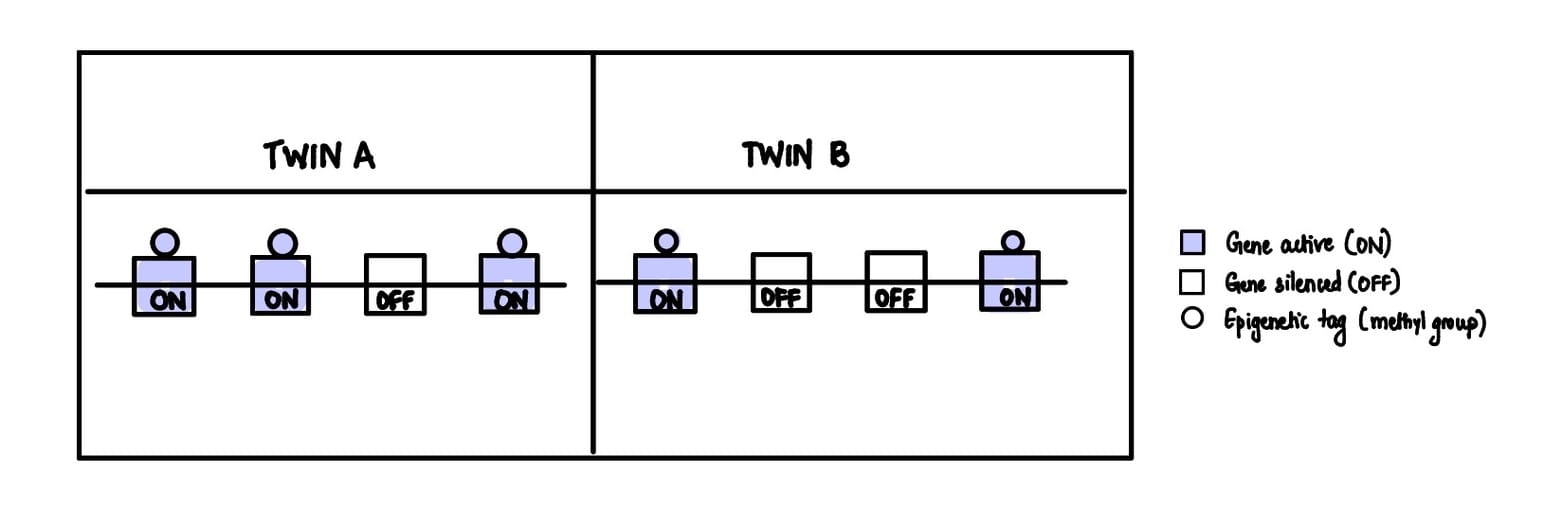
These modifications are also highly susceptible to environmental factors. They change in response to diet, stress, sleep, toxins, hormones, and social environment.
A famous study (Fraga et al., 2005) showed that young twins have nearly identical epigenetic patterns - but older twins show dramatically different ones.
Same DNA. Different biological outcomes.
Development is not perfectly symmetrical
So epigenetics already starts pulling twins apart at the molecular level. But here’s the thing - the differences can begin even before the environment has a chance to act. They can start in the womb.
Depending on when the embryo splits, twins may share a placenta (monochorionic) or have separate placentas (dichorionic). If they share one, nutrient flow may not be evenly distributed.
This may lead to differences in birth weight, organ development, and long-term health risks.
There’s even a condition called twin-to-twin transfusion syndrome (TTTS), where one twin receives more blood than the other.
So the idea that twins develop in 'identical environments' isn’t entirely true.
Stochastic biology: the role of randomness
This is where biology stops being predictable.
Some differences don’t come from genes or environment - they come from random cellular events. Scientists call these stochastic processes - a fancy word for random. Not random like chaos, but random like which way a coin lands. You can’t predict it, but it follows rules.
Take X-inactivation as an example: females have two X chromosomes, but each cell uses only one, and which one gets switched off is decided randomly, cell by cell. Two twins with the exact same X chromosomes can end up with completely different patterns of gene activity, just from chance.
Or take brain wiring: the exact connections neurons form during development aren’t fully scripted by DNA. There’s a degree of randomness in which neurons find each other. Same blueprint, different wiring.
It’s like building two identical LEGO sets, but randomly swapping some pieces between them mid-build. Nobody touched them from the outside - but they’re no longer the same.
And over time, those small differences add up.
So why do identical twins still look so similar?
Because genetics still matters a lot.
Traits like facial structure, height potential, and eye color are strongly genetically controlled.
But finer details, such as wrinkles, skin texture, behavioral tendencies, and disease risk, are shaped by factors beyond DNA.
A simple way to think about it
| Layer | Same or different? | Why |
| DNA (start) | Same | Same zygote |
| DNA (later) | Slightly different | Mutations |
| Epigenetics | Different | Environment + time |
| Development | Different | Unequal conditions |
| Randomness | Different | Stochastic events |
The bigger idea
Identical twins show us something deeper than just genetics: Life is not a copy-and-paste process. Even with the same blueprint - systems drift, environments shift, cells make 'decisions', and randomness creeps in. Slowly, individuality emerges.
The Final Thought 🌸
So, are identical twins truly identical? Only at the very beginning. After that, biology begins to introduce variation through mutations, epigenetics, development, environment, and chance.
In the end, identical twins aren’t proof that genes define us - they’re proof that even with the exact same starting point, life finds a way to make you your own person.
Sources
- Fraga et al., PNAS (2005)
- Bruder et al., American Journal of Human Genetics (2008)
- Kaminsky et al., Genome Research (2009)
- NIH
- Nature Reviews Genetics